Hello Grasshoppa,
Subsidies in Malaysia have always been a major tool for helping rakyat with rising costs such as fuel, electricity, food, you name it. Over the years, these subsidies were broad, covering nearly everyone. But the current government (the Anwar administration, through its Madani agenda) has been shifting how subsidies work, making them more targeted.
Today, I want to compare the old vs the new subsidy models & show you exactly how these changes could affect your pocket.

Past Subsidies: Blanket & Broad
In previous years, many subsidies in Malaysia were blanket subsidies. That means almost everyone benefited, including the rich or poor, frequent fuel users or not. For example:
-
In 2022, the government spent nearly RM80 billion on total subsidies, which was the highest in our history. These included petrol, diesel, LPG, electricity, cooking oil & transport.
-
Fuel subsidies were the biggest chunk: in some years, over 70% of total subsidies went to fuel.
-
The system was simpler in application: you use RON95 or diesel, you pay the subsidised price. No eligibility testing, no exclusions. If you had a car, you would benefit. If you were a frequent traveler, you would benefit. Big SUVs & small Myvis alike.
Pros of the old system:
-
Immediate relief: Prices stayed predictable & somewhat manageable for most of the rakyat.
-
Simplicity: No bureaucratic headache for eligibility checks & you benefited automatically.
Cons:
-
Over-spending: A lot of the subsidy “leaks” to high users, wealthy households, or even non-citizens in some cases.
-
Unsustainable fiscal burden: Massive subsidies cost the government budget dearly. Frequent oil price spikes or global commodity price hikes meant the subsidy bill blew up.
-
Poor targeting: The people who most needed help didn’t always get the biggest benefit proportionally. Some households barely benefited, while rich households got large gains from big fuel consumption or multiple vehicles.

Current Subsidies: Targeted & Rationalised
As of 2024-2025, subsidy reforms have been introduced to reduce waste & make sure aid reaches those who need it the most. Key changes include:
-
Targeted fuel subsidies: RON95 subsidy will exclude the wealthiest 15% of Malaysians & non-citizens. Subsidy savings will be redirected to social assistance & public services.
-
Diesel subsidy rationalisation: Diesel price increases, with exemptions for logistics, fishermen & essential services. Cash aid & subsidies remain for eligible groups.
-
More social assistance & cash aid: Schemes like SARA (Sumbangan Asas Rahmah) expanded. The government is spending more on targeted cash aids & subsidies for cost-of-living.
-
Fuel price adjustments: New subsidised RON95 prices, caps on consumption (max litres per person/month), valid ID requirement for subsidies.
How These Changes Affect You Personally
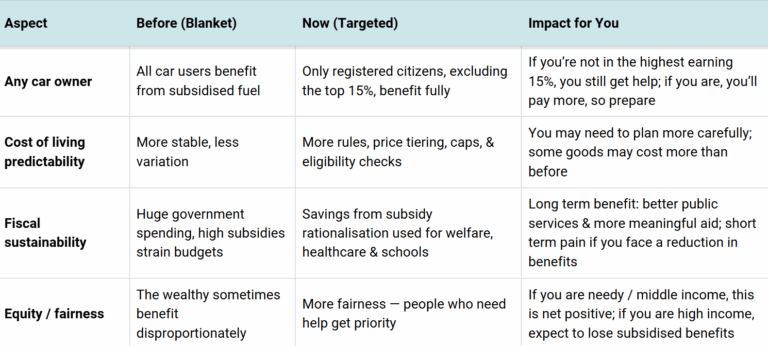
Here’s where the rubber hits the road, Grasshoppa:
Is This Better?
In my view, the move toward targeted subsidy is better, more sustainable, more fair, & more likely to benefit those truly in need. But it also comes with trade-offs. If your household used to absorb big benefits under blanket subsidies, you might feel squeezed. The key is knowing whether you’re in a group that loses or gains under the new model — then adjusting your finances accordingly.
If you expect to lose some benefits, start hedging: reduce reliance on fuel subsidies, cut down unnecessary driving, build energy efficiency & budget for grocery cost increases. If you gain, use the savings wisely: invest, save, reduce debt.
Conclusion:
Comparing past subsidies vs current ones, Malaysia is shifting from everyone gets something to those who need it get something bigger. It’s smarter in fiscal terms, more just in fairness terms, but requires Malaysians to adapt. The safety net isn’t vanishing, but it’s being reshaped.
If you play this right, you can benefit more under the new system than under the old, because you’ll be part of those intended to get help, not those subsidising others.
OSS!